
DEC 12, 2025
Toongether maintains art style consistency using Gemini 2.5 Flash Image
The rise of generative AI has opened new frontiers for creative expression, allowing developers to build tools that turn casual users into artists. However, for sequential art like comics, the challenge isn't just generating a single good image—it’s generating consistent characters, styles, and narratives across dozens of panels.
Toongether, the company behind the webcomics app, is tackling this challenge head-on. Their mission is to democratize visual storytelling, providing a platform where casual users can not only read but also create and share their own comics directly from their mobile devices. By integrating Gemini 2.5 Flash Image into their creation pipeline, they are helping users overcome the technical hurdles of drawing, enabling a new community of storytellers to co-create.
Achieving consistency at scale
Creating a comic demands rigorous consistency. Characters must remain recognizable across different poses, outfits, and facial expressions, all while adhering to a unified art style.
Initially, the toongether team relied on a complex stack involving a fine-tuned Stable Diffusion XL model enhanced with tools like ControlNet and IPAdapters. While this delivered qualitative results, it struggled with latency and flexibility—major bottlenecks for mobile builders. Generating a single image took between 20 and 30 seconds, which is too slow for a seamless user experience. Furthermore, adding support for new poses or drawing styles required significant engineering effort, limiting their ability to iterate quickly.
Orchestrating complex pipelines with Gemini
To overcome these bottlenecks, toongether migrated their core image generation pipeline to the Gemini API. They chose Gemini 2.5 Flash Image—also known affectionately as “Nano Banana” for its speed and agility—which offered the superior editing and instruction-following capabilities needed to handle complex, multi-step generation tasks.
The transition dramatically accelerated their development velocity, with the team moving from a prototype to a full production implementation in just two weeks.
To maintain character consistency while allowing for user customization, toongether leveraged Gemini 2.5 Flash Image to build a sophisticated multi-stage pipeline:
- Style analysis & reference generation: When a user creates a new character, the app provides the model with a curated list of reference characters to analyze the desired style. Based on a simple text description, the model generates a “neutral pose” reference image for this new original character.
- Asset packs & pose generation: To put that character into a story, toongether uses “asset packs”—grouped lists of descriptions for desired poses and use cases. By utilizing an instruction prompt along with the neutral reference image, they can instruct Gemini 2.5 Flash Image to generate specific scenarios without losing the character's visual identity.
- Scene composition: For backgrounds and other elements, the team provides reference images to infer the correct art style, ensuring cohesive panels.
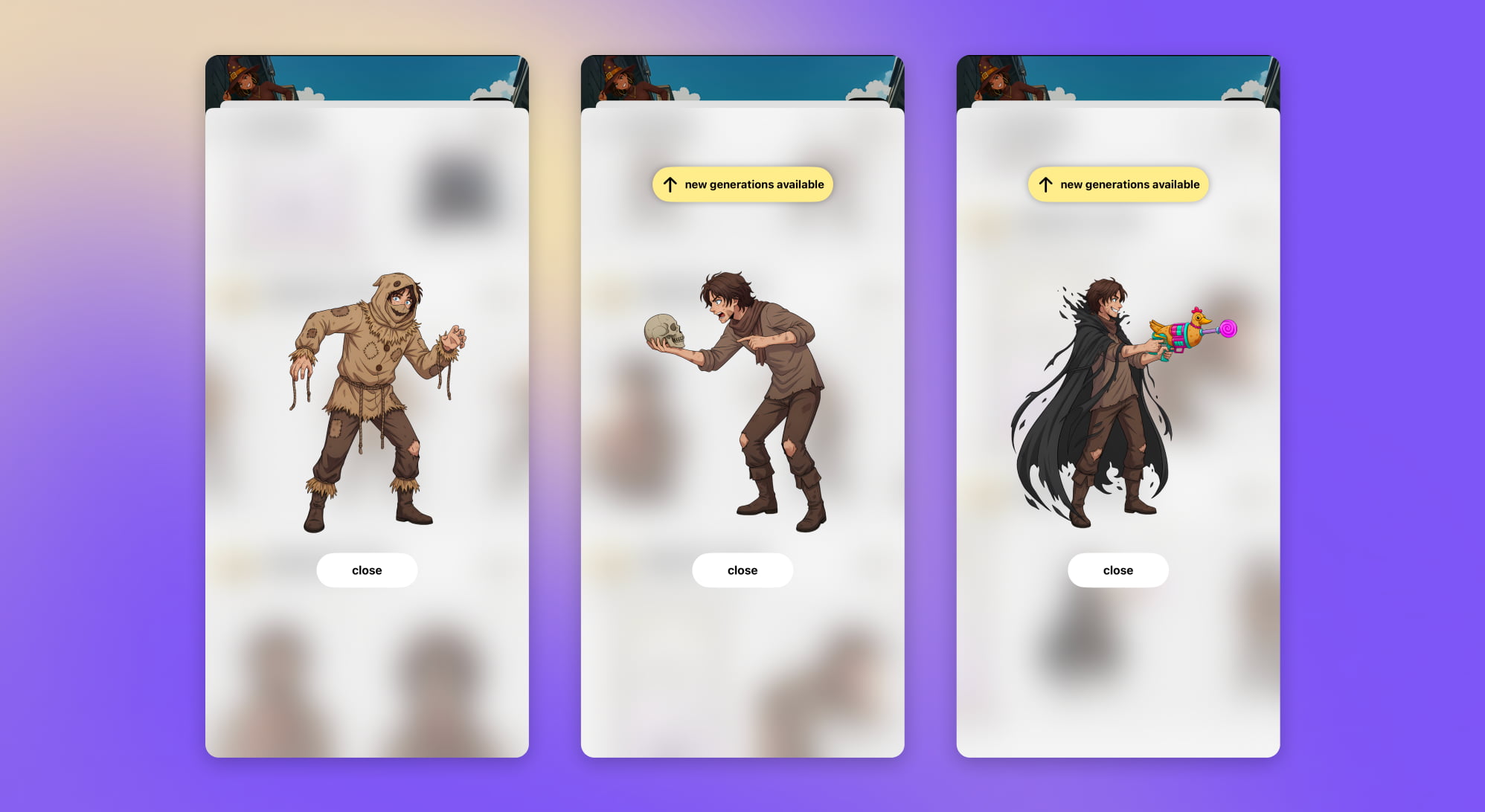
“By leveraging the advanced editing and instruction capabilities of Gemini 2.5 Flash Image, we were able to support all our use cases,” explains Samir Nasser Eddine, co-founder of toongether. “It’s now an essential part of our image generation pipelines.”
What’s next for toongether
With their foundational elements in place, the toongether team is looking toward advanced narrative features previously considered too resource-intensive. They plan to use Gemini models to support complex interactions between multiple characters within a single panel and to introduce a wider variety of drawing styles.
toongether’s journey highlights how the Gemini API helps the next cohort of builders move beyond managing complex model stacks to building sophisticated, consistent creative tools that scale to casual users.
To start building your own creative applications with Gemini models, read our API documentation.
Related case studies

Cartwheel
Cartwheel uses Gemini 2.5 Pro to develop advanced animation algorithms and optimize its platform, empowering creators with intuitive, natural language-driven character animation.

Toonsutra 2
Toonsutra uses Gemini 2.5 Pro Preview to power an immersive comic reading experience with adaptive AI narration, dynamic soundscapes, and enhanced interactivity.

Synthesia
Synthesia uses Veo 2 to create studio quality AI avatar experiences.