

 ai.google.dev-এ দেখুন ai.google.dev-এ দেখুন |  গুগল কোলাবে চালান গুগল কোলাবে চালান |  Kaggle-এ চালান Kaggle-এ চালান |  ভার্টেক্স এআই-তে খুলুন ভার্টেক্স এআই-তে খুলুন |  গিটহাবে উৎস দেখুন গিটহাবে উৎস দেখুন |
জেমা ৪ মডেলগুলোর ইনফারেন্স গতি উন্নত করার জন্য, মূল মডেলগুলোর পাশাপাশি অটোরিগ্রেসিভ “ড্রাফটার” মডেলের একটি নতুন সিরিজ প্রকাশ করা হয়েছে। শুধুমাত্র প্রাথমিক জেমা ৪ মডেলগুলোর (যাকে “টার্গেট” মডেল বলা হয়) উপর নির্ভর না করে, ড্রাফট মডেলটি টার্গেট মডেলের একটি টোকেন প্রসেস করার সময়েই অটোরিগ্রেসিভভাবে বেশ কয়েকটি টোকেন প্রেডিক্ট করে। এই কৌশলটি স্পেকুলেটিভ ডিকোডিং নামেও পরিচিত।
ড্রাফটার একাধিক ড্রাফট টোকেন অনুমান করার পর, টার্গেট মডেলকে এখন শুধু সেই প্রস্তাবিত ড্রাফট টোকেনগুলো যাচাই করতে হয়। এই যাচাইকরণ প্রক্রিয়াটি সমান্তরালভাবে সম্পন্ন হয়, যার ফলে ইনফারেন্সের গতি ব্যাপকভাবে বেড়ে যায়। এটি প্রতিটি টোকেনের জন্য টার্গেট মডেলকে যে সংখ্যক ফরোয়ার্ড পাস করতে হয়, তা কমিয়ে দেয়। যেহেতু আমাদের ড্রাফটার যাচাইকরণের জন্য টোকেনের একটি ক্রম তৈরি করে, তাই আমরা এটিকে মাল্টি-টোকেন প্রেডিকশন (MTP) হেড বলে থাকি।
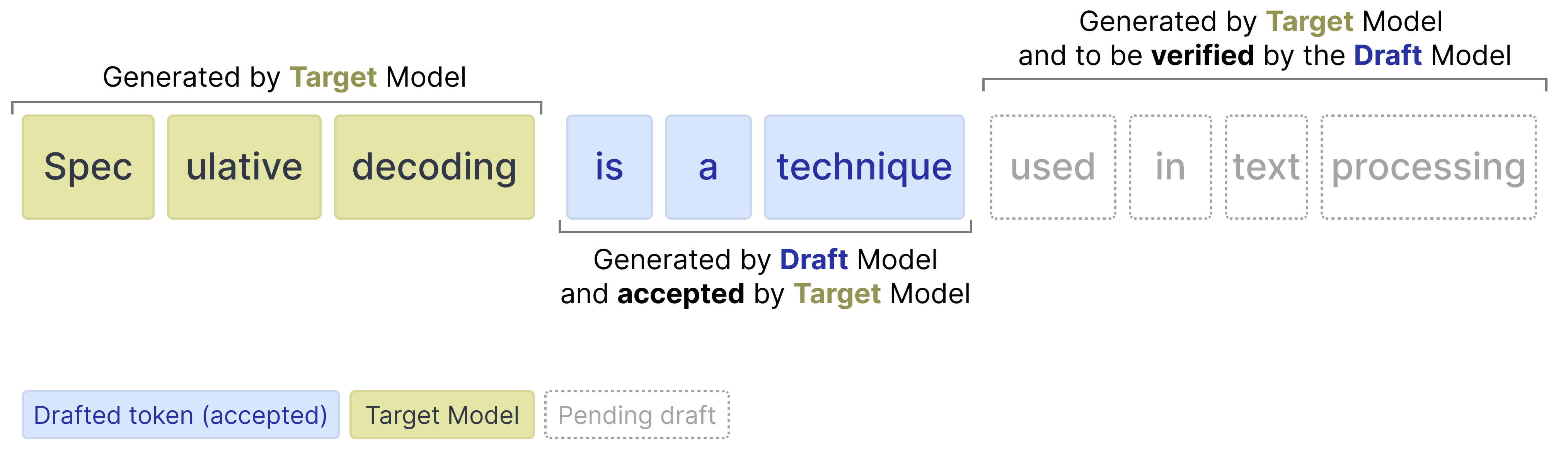
জেমা ৪ ফ্যামিলির জন্য প্রকাশিত ড্রাফট মডেলগুলো আকারে ছোট এবং এতে ড্রাফট করা টোকেনগুলোর মান উন্নত করতে ও ইনফারেন্সের গতি আরও বাড়াতে বেশ কিছু বর্ধিত বৈশিষ্ট্য যোগ করা হয়েছে; যেমন, আরও ভালো প্রেডিকশন পাওয়ার জন্য টার্গেট মডেল অ্যাক্টিভেশন এবং কেভি-ক্যাশ ব্যবহার করা।
These enhancements result in significant decoding speedups while guaranteeing similar quality, making these checkpoints perfect for low-latency and on-device applications.
পাইথন প্যাকেজ ইনস্টল করুন
Install the Hugging Face libraries required for running the Gemma 4 and Gemma 4 assistant model.
# Install PyTorch & other librariespip install torch accelerate# Install the transformers librarypip install transformers
মডেলগুলো লোড করুন
For each target model (one of the main models in the Gemma 4 model), there is an assistant to helps speed up inference. As such, you will load two models:
- Target (eg,
google/gemma-4-E2B-it): The full Gemma 4 target model - Drafter (eg,
google/gemma-4-E2B-it-assistant): The lightweight 4-layer MTP drafter that proposes candidate tokens
Note that the drafter is often referred to as the assistant since the model helps the larger model in choosing which tokens to predict.
Use the transformers libraries to create an instance of a processor and model using the AutoProcessor and AutoModelForCausalLM classes as shown in the following code example:
TARGET_MODEL_ID = "google/gemma-4-E2B-it" # @param ["google/gemma-4-E2B-it", "google/gemma-4-E4B-it", "google/gemma-4-12B-it", "google/gemma-4-31B-it", "google/gemma-4-26B-A4B-it"]
ASSISTANT_MODEL_ID = TARGET_MODEL_ID + "-assistant"
import torch
from transformers import AutoProcessor, AutoModelForCausalLM

# Target Model
processor = AutoProcessor.from_pretrained(TARGET_MODEL_ID)
target_model = AutoModelForCausalLM.from_pretrained(
    TARGET_MODEL_ID,
    torch_dtype=torch.bfloat16,
    device_map="auto",
)

# Assistant Model (the drafter)
assistant_model = AutoModelForCausalLM.from_pretrained(
    ASSISTANT_MODEL_ID,
    torch_dtype=torch.bfloat16,
    device_map="auto",
)
[transformers] `torch_dtype` is deprecated! Use `dtype` instead!
Loading weights:   0%|          | 0/1951 [00:00<?, ?it/s]
Loading weights:   0%|          | 0/50 [00:00<?, ?it/s]
সহকারীর সাথে জেমা ৪
Using an assistant in transformers is fortunately quite straightforward and requires you to pass the assistant model to the model.generate function:
# Process inputs with the `target_model`
messages = [
    {
        "role": "user",
        "content": "Explain the concepts of speculative decoding and MTP in 3 sentences."
    }
]
input_text = processor.apply_chat_template(messages, tokenize=False, add_generation_prompt=True)
inputs = processor(text=input_text, return_tensors="pt").to(target_model.device)

# `assistant_model=assistant_model` is all you need to enable MTP!
outputs = target_model.generate(
    **inputs,
    assistant_model=assistant_model,
    max_new_tokens=256,
    do_sample=False,
)

# Decode the response into text
response = processor.decode(outputs[0][inputs["input_ids"].shape[1]:], skip_special_tokens=True)
print(response)
**Speculative decoding** is a technique where a smaller, faster language model (the "draft model") generates several candidate tokens, which are then quickly verified by a larger, more accurate model to produce a final, high-quality output much faster than decoding the large model alone. **MTP (Multi-Task Prediction)** involves training a single model to perform multiple related tasks simultaneously, allowing it to leverage shared knowledge across different objectives. Together, these methods aim to significantly accelerate the inference speed of large language models while maintaining or improving output quality.
অভ্যন্তরীণ প্রক্রিয়াটি নিম্নরূপ:
- The drafter proposes N tokens generated autoregressively
- The target model verifies all N tokens in one forward pass
- Drafted tokens with high probabilities are accepted
- Drafted tokens with low probabilities are rejected
- Since the target model does a forward pass, it will always generated 1 token by itself regardless of how many drafted tokens were accepted or rejected
খসড়া টোকেন
খসড়া প্রস্তুতকারী টার্গেট মডেলের যাচাই করার জন্য যেকোনো সংখ্যক টোকেন তৈরি করতে পারেন। তবে, টার্গেট মডেল চাইলে নির্দিষ্ট কিছু টোকেন প্রত্যাখ্যান করতে পারে। যখন এটি তা করে, তখন তার পরবর্তী সমস্ত টোকেন উপেক্ষা করা হয়।

As such, it is important to know the tradeoff when using various values for the number of drafted tokens.
আরও খসড়া টোকেন
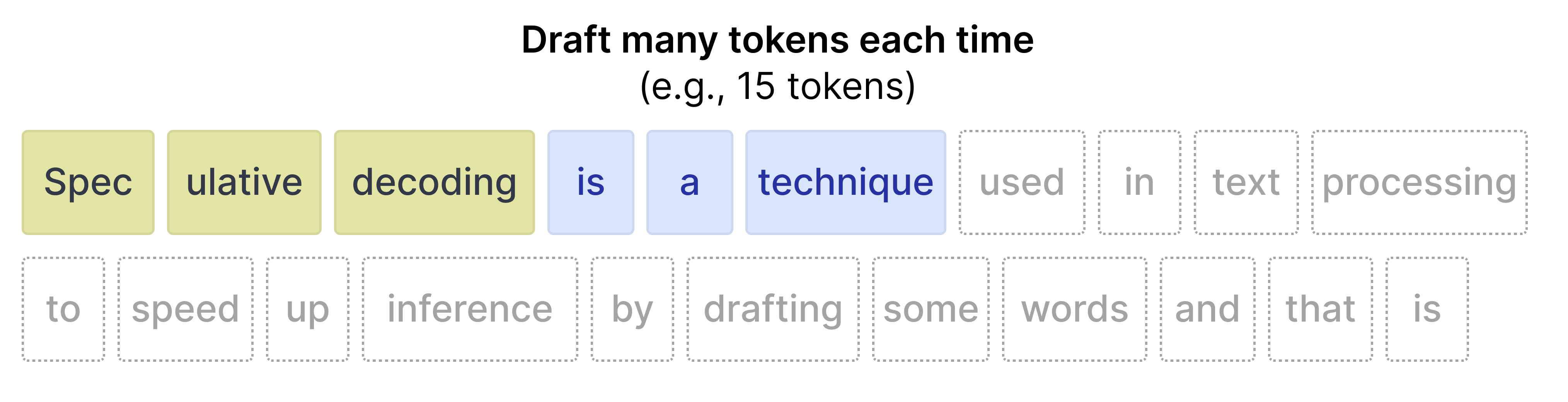
যখন আপনি অনেকগুলো টোকেন ড্রাফট করেন (উদাহরণস্বরূপ ১৫টি), তখন সব টোকেন গৃহীত না হওয়ার সম্ভাবনা অনেক বেশি থাকে। ফলে, কম্পিউট অপচয়ের সম্ভাবনাও বেড়ে যায়। এর বিপরীতে, গ্রহণের হার বেশি হলে এটি ইনফারেন্সের গতি বাড়িয়ে দেওয়ার প্রবণতা দেখায়।
কম খসড়া টোকেন
যখন আপনি কম টোকেন ড্রাফট করেন, তখন গ্রহণের হার বেশি হওয়ার প্রবণতা থাকে, কারণ প্রাথমিক প্রম্পটের কাছাকাছি থাকা টোকেনগুলো বেশি নির্ভুল হয়। তবে, যেহেতু অল্প কয়েকটি টোকেন ড্রাফট করা হয়, তাই একটি দ্রুততর ড্রাফটার মডেল থেকে যে গতি বৃদ্ধি পাওয়া যেত, তা কমে যায়।

সৌভাগ্যবশত, transformers আপনার ব্যবহারের ক্ষেত্রের জন্য সেরা মান নিয়ে পরীক্ষা-নিরীক্ষা করার প্রয়োজন নেই, কারণ আপনি num_assistant_tokens_schedule কে "heuristic"-এ সেট করতে পারেন, যা রানটাইমে স্বয়ংক্রিয়ভাবে ড্রাফট করা টোকেনের সংখ্যা নির্ধারণ করবে।
- সমস্ত টোকেন গৃহীত হয়েছে -- যেহেতু খসড়া প্রস্তুতকারী নির্দেশনার ক্ষেত্রে বেশ নির্ভুল, তাই খসড়া করার জন্য টোকেনের সংখ্যা ২ বৃদ্ধি করুন। যদি খসড়া করা টোকেনগুলোও গৃহীত হয়, তবে এর সংখ্যা বৃদ্ধি করলে কাজের গতি বাড়তে পারে।
- যেকোনো টোকেন প্রত্যাখ্যাত হলে -- যদি কোনো টোকেন প্রত্যাখ্যাত হয়, তাহলে ড্রাফট করার জন্য টোকেনের পরিমাণ ১ কমিয়ে দিন। টোকেনের সংখ্যা কমানোর ফলে, যদি টার্গেট মডেলটি বেশিরভাগ টোকেন প্রত্যাখ্যান করতে থাকে, তাহলেও ড্রাফট করা খুব বেশি টোকেন নষ্ট হয় না।
Likewise, you can update number of draft tokens by updating num_assistant_tokens in the drafter like so:
# Update how many draft tokens are generated at the start of inference
assistant_model.generation_config.num_assistant_tokens = 4

# Update how the number of draft tokens are updated ("heuristic" for a dynamic schedule and "constant" for a constant schedule)
assistant_model.generation_config.num_assistant_tokens_schedule = "heuristic"

# Run with MTP
outputs = target_model.generate(
    **inputs,
    assistant_model=assistant_model,
    max_new_tokens=256,
    do_sample=False,
)

# Decode the response into text
response = processor.decode(outputs[0][inputs["input_ids"].shape[1]:], skip_special_tokens=True)
print(response)
**Speculative decoding** is a technique where a smaller, faster language model (the "draft model") generates several candidate tokens, which are then verified by a larger, more accurate model to quickly produce a high-quality output. **MTP (Multi-Task Prediction)** involves training a single model to perform multiple related tasks simultaneously, allowing it to leverage shared knowledge across different objectives. Together, these methods aim to significantly speed up the inference process of large language models while maintaining or improving output quality.